Can i run a commercial bess for peak shaving to cut costs? For many facilities, the answer may be yes—but the savings depend on the site’s demand charges, load profile, and battery controls. A battery can discharge during short periods of high demand, reducing the peak recorded by the utility meter. Picture a warehouse starting several refrigeration compressors at once. A correctly sized system may supply part of that brief surge instead.
Before comparing the 7 best commercial BESS options, review at least twelve months of interval meter data. Check peak-demand charges, operating hours, utility rate schedules, and any export restrictions. Dr. Imre Gyuk, a leading energy-storage specialist at the U.S. Department of Energy, has emphasized the value of storage for managing electricity systems. The practical lesson for buyers is simple: size the battery around the facility’s actual load, not a vendor’s headline capacity. Details matter.
A lower peak is not automatically a lower bill. Battery losses, demand-charge rules, installation costs, and controls can change the result. Ask vendors to show their assumptions, expected cycling, warranty limits, and modeled savings. Then compare those estimates against real meter data. No projection is perfect; operating schedules change, and savings can fall short. That uncertainty deserves a clear place in any purchase decision.
Understanding Commercial BESS and Peak Shaving
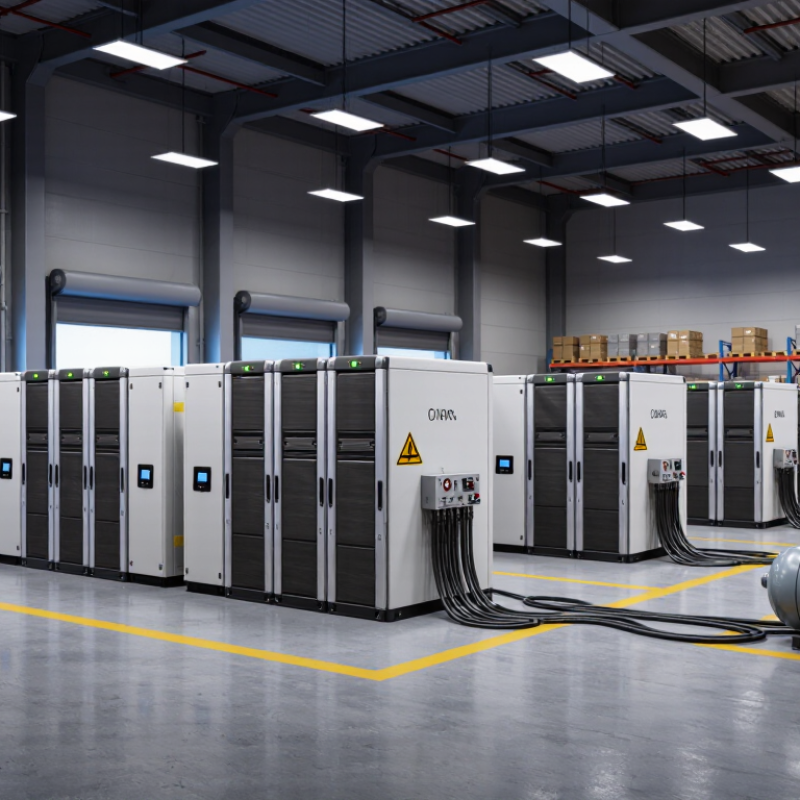
A commercial battery energy storage system, or BESS, stores electricity for use later. For peak shaving, it discharges during short periods when a building’s power demand climbs, then recharges when demand falls. The goal is to reduce the highest measured demand on the utility bill, not simply to use less electricity overall. Demand-charge rules vary by tariff, so the billing interval and seasonal schedule matter.
The scale of the problem varies widely. The U.S. Energy Information Administration’s 2018 Commercial Buildings Energy Consumption Survey counted about 5.9 million commercial buildings across roughly 97 billion square feet. A chilled-water plant, bakery ovens, and evening vehicle charging create very different load peaks. A site’s interval-meter data is therefore more useful than a generic battery-size estimate. Small details count.
Battery losses matter, too. NREL’s 2024 Annual Technology Baseline uses an 85% round-trip efficiency assumption for lithium-ion storage. In practice, that means some stored energy is lost between charging and discharging. A BESS should be sized around the building’s actual peak, its duration, and the applicable tariff. Oversizing can tie up capital; undersizing may leave the monthly peak largely untouched. Even a tidy spreadsheet can miss an awkward shift change. A pilot using measured load data can expose that gap before a full installation.
7 Best Commercial BESS for Peak Shaving Cost Savings - Understanding Commercial BESS and Peak Shaving
| Commercial BESS Size |
Power Rating |
Usable Energy |
Duration |
Modeled Peak Reduction |
Illustrative Installed Cost |
Estimated Gross Demand-Charge Savings / Year |
Simple Payback Range |
| Small commercial |
50 kW |
100 kWh |
2 hours |
Up to 50 kW |
$40,000–$80,000 |
$9,000–$18,000 |
2.2–8.9 years |
| Large commercial |
100 kW |
200 kWh |
2 hours |
Up to 100 kW |
$80,000–$160,000 |
$18,000–$36,000 |
2.2–8.9 years |
| Mid-size facility |
150 kW |
300 kWh |
2 hours |
Up to 150 kW |
$120,000–$240,000 |
$27,000–$54,000 |
2.2–8.9 years |
| Large facility |
250 kW |
500 kWh |
2 hours |
Up to 250 kW |
$200,000–$400,000 |
$45,000–$90,000 |
2.2–8.9 years |
| Industrial / campus |
500 kW |
1,000 kWh |
2 hours |
Up to 500 kW |
$400,000–$800,000 |
$90,000–$180,000 |
2.2–8.9 years |
| Large industrial |
750 kW |
1,500 kWh |
2 hours |
Up to 750 kW |
$600,000–$1,200,000 |
$135,000–$270,000 |
2.2–8.9 years |
| Utility-scale commercial site |
1,000 kW |
2,000 kWh |
2 hours |
Up to 1,000 kW |
$800,000–$1,600,000 |
$180,000–$360,000 |
2.2–8.9 years |
Planning-level illustration, not a vendor quote. Estimates assume a 2-hour battery, an installed cost of $400–$800 per kWh, and a demand charge of $15–$30 per kW per month. Gross annual savings are calculated as modeled peak reduction × demand charge × 12; simple payback compares the cost and savings ranges. Actual results depend on utility tariffs, load shape, peak timing, system efficiency, usable state of charge, installation requirements, and battery degradation. The modeled peak reduction is not guaranteed; energy-charge savings, incentives, operating costs, financing, and maintenance are excluded.
How Battery Storage Reduces Commercial Electricity Costs
Commercial battery energy storage systems reduce electricity costs by controlling when a facility imports power.
During low-price hours, the battery charges. During expensive periods, it supplies equipment such as chillers, pumps, and refrigeration units.
This strategy lowers peak demand, which often drives a large part of a commercial bill.
The U.S. Energy Information Administration reports that demand charges are common in commercial tariffs. The U.S. Department of Energy’s Pathways to Commercial Liftoff report also identifies falling storage costs and flexible operation as key drivers for wider adoption.
In practice, a battery can respond within seconds, unlike manual load adjustments. A 2024 NREL analysis shows that storage economics depend heavily on system duration, utilization, financing, and local rates. The numbers are useful, but forecasts are imperfect.
Tips:
Review twelve months of interval meter data before sizing the system. Target the highest fifteen-minute demand peaks, not average consumption.
Check battery degradation, cycling limits, standby losses, and maintenance costs. A control system should avoid discharging too early. Otherwise, the battery may be empty when the utility peak arrives.
Savings are not automatic. Tariff changes, cloudy solar output, seasonal production, and unexpected equipment loads can weaken results. Independent measurement and verification can reveal whether the projected savings are real.
Criteria for Comparing the Seven Best Commercial BESS
Comparing seven commercial BESS options starts with the site’s actual load curve, not a headline capacity. A warehouse with a brief afternoon spike needs different power and discharge duration from a cold-storage facility running compressors for hours. Check kilowatts, usable kilowatt-hours, response time, and expansion limits. Details matter. A larger battery is not automatically better.
Compare the full installed cost, expected cycle life, warranty conditions, and controls that respond to the site’s tariff. NREL’s 2024 Annual Technology Baseline uses about 85% round-trip efficiency in its utility-scale lithium-ion assumptions; real project performance depends on equipment and operating conditions. The IEA’s 2024 Batteries and Secure Energy Transitions report says lithium-ion battery prices have fallen about 90% since 2010, but cell-price declines do not equal equivalent savings on a complete commercial system. Ask for modeled peak reduction using interval-meter data, including seasonal demand charges and charging losses. A clean spreadsheet can still miss HVAC loads, downtime, or a tariff change. Not always. Also compare fire protection, thermal management, service access, and monitoring provisions; these affect usable space and operating plans. One awkward detail: vendor forecasts may assume a perfect load profile. Request the assumptions, then test them against a difficult month.
Seven Commercial BESS Sizes: Modeled Annual Peak-Shaving Savings
Illustrative comparison by discharge power and two-hour energy capacity. No manufacturer or brand performance is represented.
Modeled gross savings assume a demand charge of $15 per kW per month and an effective peak reduction equal to 80% of rated discharge power. Annual savings are calculated as discharge power × 80% × $15 × 12. Energy charges, battery losses, operating costs, and project costs are excluded; actual savings depend on the site's tariff and load profile.
Seven Commercial BESS Options for Peak-Shaving Savings
Commercial peak shaving works best when the battery matches the site’s brief demand spikes, not just its daily energy use. Seven practical options include compact one-to-two-hour cabinets, longer-duration container systems, modular rack systems, AC-coupled batteries, DC-coupled solar-and-storage systems, expandable multi-building installations, and systems with automated dispatch controls. Each can reduce grid imports during a peak, but savings depend on tariff structure, load shape, battery efficiency, and control settings.
The International Energy Agency’s 2024 Batteries and Secure Energy Transitions report says global energy storage capacity needs to grow sixfold by 2030, with batteries supplying most of that expansion. This signals a rapidly developing market, not a guarantee of savings for every facility.
A refrigerated warehouse may have sharp compressor starts; an office may peak briefly when cooling and lifts overlap. Review at least twelve months of interval-meter data, then model demand charges alongside energy prices and degradation. A neat spreadsheet can still miss an unusual shift change.
Tips: Ask vendors to show modeled peak reduction in kilowatts, usable capacity, and expected cycles. Check backup needs, fire-safety design, and integration limits before choosing a cabinet or container. Leave headroom for load growth; forecasts are rarely perfect.
Factors That Influence System Performance and Payback
Peak-shaving payback depends on whether a battery discharges during the interval that sets a facility’s monthly demand charge.
A 100 kW reduction at a hypothetical $18/kW-month tariff avoids up to $1,800 monthly before charging costs, degradation, and fees.
Check the utility’s billing interval, demand ratchets, and time-of-use rates; a short evening spike can matter more than a high daily average.
Small details count.
Efficiency changes the usable savings. NREL’s 2024 Annual Technology Baseline models utility-scale battery storage at about 85% round-trip efficiency; the U.S. Department of Energy’s 2022 cost and performance assessment reports lithium-ion values near 86%. These are reference points, not guarantees for a commercial installation.
Actual results depend on inverter losses, temperature, controls, and operating conditions. Size discharge power for the peak, then check whether stored energy can sustain it for the full peak window. Leave room for backup reserves if required.
The awkward part: a system may look excellent in a spreadsheet, yet miss savings when controls respond late or the peak shifts. Compare interval-meter data with the proposed dispatch schedule, and include annual capacity fade and maintenance in the payback model.
Conclusion
Commercial battery energy storage systems (BESS) can help businesses reduce electricity expenses by storing energy and supplying it during periods of high demand. This practice, known as peak shaving, can lower demand charges, ease pressure on electrical infrastructure, and improve the use of on-site renewable energy. If you’re asking, “can i run a commercial bess for peak shaving to cut costs,” the answer depends on your facility’s load patterns, utility rates, operating schedule, and the system’s ability to respond to demand peaks.
Comparing commercial BESS options involves more than looking at battery capacity. Consider power output, usable energy, efficiency, safety features, controls, scalability, service life, and installation requirements. The best fit is the system that aligns with your peak-demand profile and delivers reliable performance without unnecessary capacity. Actual savings and payback also depend on electricity tariffs, charging strategy, equipment costs, maintenance, and how often peak events occur. A careful assessment of these factors can help businesses choose a practical system and set realistic expectations for long-term cost savings.
 Luzz Solar
