Solar panels work outdoors, where dust, pollen, bird droppings, and mineral-rich water settle on their glass. A thin gray film may look harmless, yet it can reduce the light reaching the cells. The IEA PVPS Task 13 report on photovoltaic soiling identifies typical energy losses of about 2% to 4% annually in many locations. Dry, dusty regions can experience much higher losses. Sometimes above 10%.
Cleaning, however, is not simply a matter of spraying water and rubbing the surface. Fine sand can act like abrasive powder beneath a rough cloth. Hard water can leave calcium spots that become more difficult to remove after repeated drying. The U.S. Department of Energy recommends checking manufacturer guidance and local conditions before choosing a cleaning method. That advice matters because anti-reflective coatings, seals, frames, and rooftop access points can respond differently to pressure and chemicals.
This guide explains how to clean solar panels without scratching them, using practical maintenance principles and evidence from industry research. It covers when cleaning is worthwhile, which tools reduce surface friction, and why cool panels are safer to wash. A soft brush can still cause damage if trapped grit remains underneath. That detail is easy to miss.
There is no universal cleaning schedule. Rain may remove loose dust but leave oily deposits or bird waste behind. I may be overly cautious about manual scrubbing, but a small scratch can remain for the panel’s entire service life. Careful inspection should come before cleaning. Your panels deserve less force, not more.
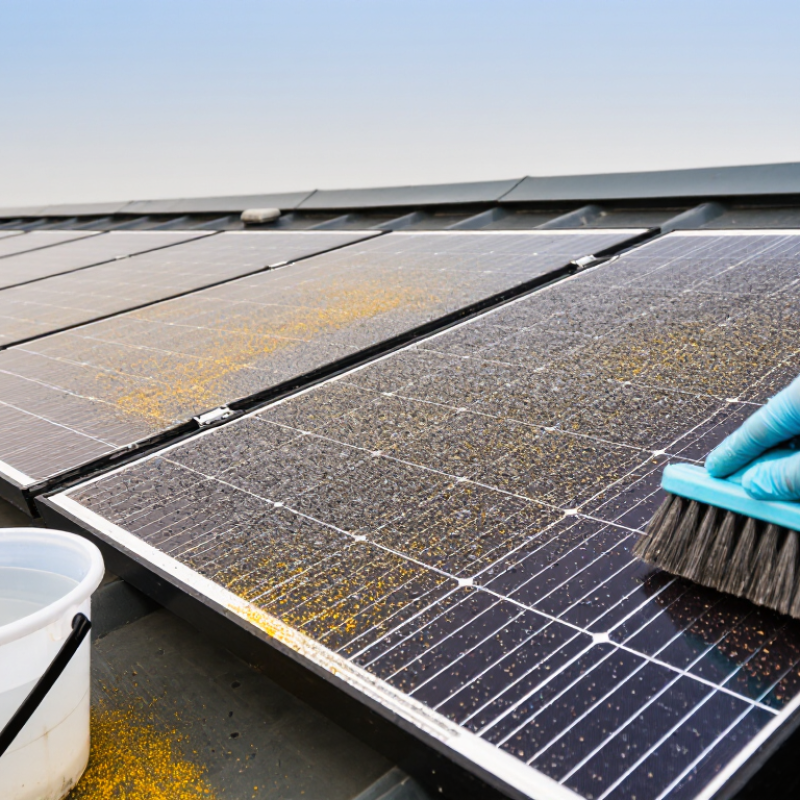
Before cleaning, inspect the panels from the ground and from a stable access point. Look for cracks, cloudy layers, loose frames, exposed wires, and damaged seals. Never step on the glass. A small crack may spread under body weight or sudden temperature changes. Heavy bird droppings, oily marks, and white mineral stains need different treatment. I once underestimated dried droppings after a dry season. Rubbing immediately only moved grit across the surface.
Clean panels when they are cool, preferably early in the morning. Start with a gentle rinse using clean, low-pressure water. This removes loose sand before any contact. Use a soft, clean brush with flexible bristles, or a lint-free microfiber tool reserved for panel cleaning. Work from the top downward with light strokes. Rinse the tool often. One trapped grain of sand can create a visible line. Avoid abrasive powders, blades, rough sponges, strong household detergents, and pressure washers. They can damage coatings, seals, or the glass edge.
For mineral deposits, filtered or low-mineral water can reduce spotting. Do not scrub harder when marks remain. That usually increases the risk. Follow the panel maker’s care instructions, especially for coated surfaces. If cables, connectors, or cracked glass appear unsafe, stop and contact a qualified solar technician. Water and electricity require careful control. My own cleaning routine still needs adjustment after windy days; dust returns faster than expected, so condition checks matter more than a fixed schedule.
| Panel Condition | Typical Signs | Scratch Risk | Scratch-Safe Cleaning Method | Recommended Tools and Water | What to Avoid | Suggested Timing |
|---|---|---|---|---|---|---|
| Light dust or loose pollen | A thin, dry layer is visible, but there are no stuck-on stains or bird droppings. | Low | Rinse gently from the top downward. If wiping is necessary, use a wet, clean microfiber pad with very light pressure. | Clean water, a soft microfiber cloth or non-abrasive sponge, and a low-pressure hose. | Dry dusting, paper towels, brushes with stiff bristles, and rubbing the glass while dry. | When output noticeably declines or after a prolonged dry, dusty period. |
| Bird droppings or isolated spots | Small, hardened deposits are attached to the glass and may block part of a cell. | Medium | Soak the deposit with clean water for several minutes, then lift it away with a soft wet microfiber cloth. Repeat soaking instead of increasing pressure. | Clean water, a soft microfiber cloth, and a telescopic handle if the installation is safely accessible. | Scraping with metal or plastic blades, abrasive pads, dry wiping, and concentrated household cleaners. | Remove promptly after the panel surface has cooled. |
| Pollen, road film, or light greasy residue | A cloudy or slightly sticky film remains after ordinary rinsing. | Medium | Rinse first to remove loose particles, then wipe gently with a diluted, pH-neutral cleaning solution approved for glass surfaces. Rinse thoroughly afterward. | Soft microfiber cloths, clean water, and a small amount of mild pH-neutral soap solution. | Ammonia, bleach, strong solvents, powdered detergents, and excessive soap that can leave a residue. | Clean during routine maintenance when the film becomes visible or affects performance. |
| Mineral deposits or hard-water spots | White, chalky rings or spots remain after water evaporates. | Medium | Use low-mineral or deionized water for the final rinse. For persistent deposits, test a manufacturer-approved, non-abrasive glass cleaner on a small area first. | Deionized or distilled water for the final rinse, clean microfiber cloths, and a soft squeegee with a clean rubber edge. | Vinegar or acidic products used without checking the panel instructions, abrasive polishing compounds, and hard water allowed to dry repeatedly. | Use a low-mineral final rinse whenever local water leaves visible spotting. |
| Heavy mud, construction dust, or stuck-on grime | Large areas are coated, and loose particles may contain sand or grit. | High | Pre-rinse thoroughly from the top downward without touching the surface. Soak the remaining film, then make one gentle pass with a clean, wet microfiber tool. | Low-pressure water, multiple clean microfiber cloths, and a soft water-fed cleaning pole where appropriate. | Pressure washers at close range, dry brushing, repeated scrubbing, and reusing dirty cloths. | Clean after nearby construction or severe contamination, preferably by a trained professional. |
| Existing scratches, haze, or damaged coating | Visible lines, cloudy areas, delamination, chipped edges, or damaged protective surfaces. | High | Do not polish or aggressively clean. Photograph the condition, consult the installation documentation, and request a qualified inspection before washing. | Only a gentle water rinse if it can be completed safely without contact; otherwise use a qualified service provider. | Polishing compounds, abrasive cleaners, blades, pressure washing, and attempts to hide damage through scrubbing. | Inspect before every cleaning; repair or evaluation should take priority over cosmetic cleaning. |
| Hot panel surface or strong direct sunlight | Water evaporates immediately, leaving streaks or mineral spots, and the glass feels hot. | Medium | Postpone cleaning until early morning, late afternoon, or a cool, overcast period. Work in small sections and prevent cleaning solution from drying. | Clean water, soft microfiber tools, and a squeegee with an undamaged edge. | Cold water on very hot glass, cleaning during peak heat, and allowing soap or minerals to dry on the panel. | Choose a cool period with no immediate rain or freezing conditions. |
| Snow, frost, or ice accumulation | The surface is covered by frozen precipitation or compacted ice. | High | Allow snow or frost to melt naturally when possible. If removal is essential, follow the system instructions and use only a purpose-designed soft tool. | A soft, non-abrasive snow-removal tool approved for photovoltaic glass; use no sharp edge. | Chisels, metal scrapers, hot water, salt, de-icing chemicals, and walking on the panels. | Usually allow natural melting unless the installation documentation specifies another safe procedure. |
| Panels located on a steep or difficult-to-reach roof | Cleaning requires climbing, roof access, ladders, or work near electrical equipment. | High | Use a qualified solar or roof-cleaning professional. Shut down equipment only according to the system instructions and keep clear of electrical connections. | Professional fall protection, suitable access equipment, soft cleaning tools, and site-specific electrical safety procedures. | Walking on modules, leaning ladders against panels, working in wet or windy conditions, and spraying electrical components. | Schedule professional inspection and cleaning according to site conditions and local safety requirements. |
Clean them early in the morning or during an overcast period. Cool glass dries more slowly and leaves fewer mineral spots. Avoid hot afternoons, strong wind, and storms. Timing matters.
Yes. Use clean, low-pressure water from the highest edge downward. Let cloudy runoff carry away loose sand. Never wipe a dry, gritty surface. One grain can leave a visible line.
Use a soft, flexible brush or a clean microfiber tool. Reserve the tool for panel cleaning. Rinse it often. A trapped grain of sand can scratch the glass.
Avoid abrasive powders, blades, rough sponges, solvents, and strong household detergents. These materials may damage coatings, seals, or glass edges. Plain clean water often works better.
Wet the deposit first and wait several minutes. Then rinse gently or use a soft tool. Do not scrape hardened material. I once rubbed too soon and spread grit across the surface.
Use filtered or low-mineral water when possible. Rinse again instead of applying more pressure. Hard water may leave spots after drying. Stronger scrubbing is usually the wrong answer.
Inspect from the ground and a stable access point. Look for cracks, cloudy layers, loose frames, exposed wires, and damaged seals. Never step on the glass. Stop if access feels unsafe.
Use panel condition, not a fixed calendar. Check after dry, windy weather, nearby construction, or heavy bird activity. Dust may return quickly. My own routine still needs adjustment.
Learning how to clean solar panels without scratching them begins with checking their condition and choosing a gentle approach. Look for cracks, loose parts, heavy buildup, or signs of heat before starting, and avoid cleaning panels during the hottest part of the day. Prepare soft, nonabrasive tools, such as a clean microfiber cloth, a soft brush, and a squeegee with a smooth edge. Use clean water and a mild, solar-panel-safe cleaning solution rather than strong chemicals or rough household products.
First, rinse the panels thoroughly to remove loose dust, sand, and grit that could cause scratches during washing. Gently clean the surface with minimal pressure, working in small sections and frequently rinsing the tools. Afterward, rinse away all soap and remaining dirt, then dry the panels with a soft, lint-free cloth or let them air-dry in suitable conditions. Finally, inspect the surface for streaks, residue, new marks, or existing damage, and stop immediately if any panel appears unsafe to handle.

 Luzz Solar