2026 Best Ways to Safely Recycle Old Solar Batteries?

Time:2026-09-12 Author:Sophia
0%

Old solar batteries can store dangerous energy long after a solar system stops working. Their cases may look dusty, swollen, cracked, or completely harmless. They are not ordinary household waste. This guide explains how to safely recycle old solar batteries through careful identification, controlled handling, and approved recycling channels. The right approach protects people, property, and the environment.

Battery chemistry matters. Lead-acid, lithium-ion, nickel-based, and flow batteries require different transport and processing methods. Check the manufacturer’s label, installation records, or advice from a qualified solar technician. Do not open, cut, crush, burn, or dismantle a battery. A damaged lithium battery may heat rapidly, while a leaking lead-acid unit can damage floors and skin. Keep questionable batteries isolated from children, pets, flames, and metal objects.

Use a certified battery recycler, manufacturer take-back program, or licensed hazardous-waste service where available. Ask how the provider handles your specific chemistry and whether collection is required. Rules and recycling capacity differ between regions, so online advice may be incomplete. That deserves attention. Before transport, follow the recycler’s packaging instructions exactly, and never improvise with loose terminals or a damaged enclosure. If a battery is hot, smoking, leaking heavily, or swelling, move away and contact emergency or specialist services instead of handling it. A responsible process may feel slower, but it prevents avoidable fires, chemical exposure, and wasted recoverable materials. Small details matter here.
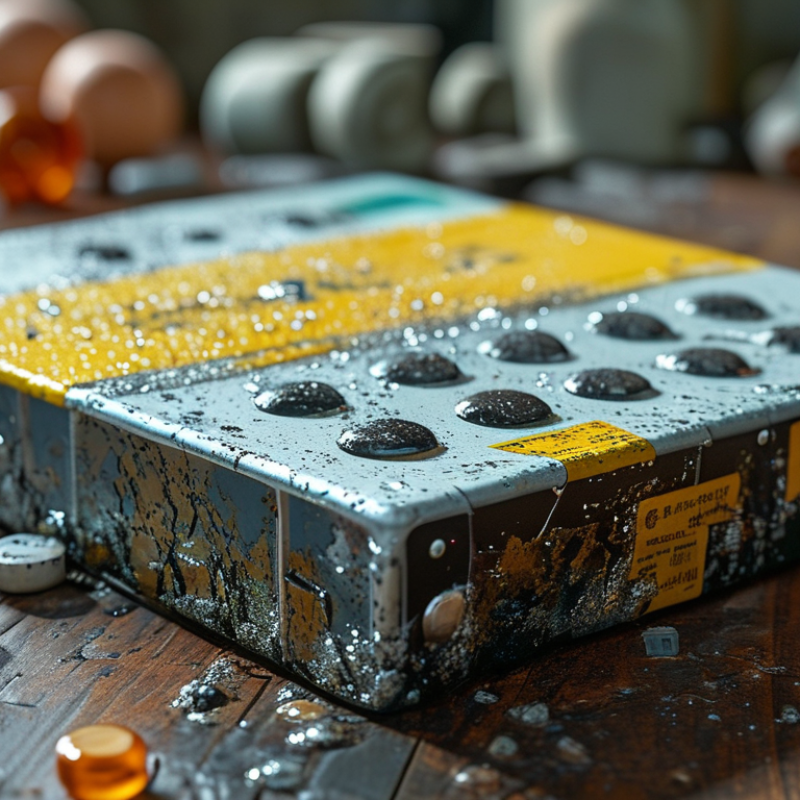
2026 Best Ways to Safely Recycle Old Solar Batteries?

Verify Battery Chemistry, Age, Damage, and 10-Year Warranty Status

Before recycling an old solar battery, verify its chemistry, age, physical condition, and warranty status. Lithium iron phosphate and nickel-manganese-cobalt batteries require different handling from lead-acid units. Find the model label, installation date, service records, and warranty document. A ten-year warranty does not prove safe operation. It only defines possible coverage conditions.

Look for swelling, cracked cases, leaking electrolyte, burnt terminals, unusual heat, or a sharp chemical smell. Stop handling damaged units. Keep them isolated from metal tools and moisture, then contact a qualified battery recycler.

The International Energy Agency’s Global Critical Minerals Outlook 2024 indicates recycling could supply about one-fifth of lithium, nickel, and cobalt demand by 2050. That makes accurate sorting more important, not less. Chemistry mistakes can lower recovery quality and increase fire risks.

IRENA projects 78 million tonnes of solar-panel waste by 2050, showing how quickly clean-energy equipment can accumulate. Batteries add another difficult stream.

My own practical caution is simple: warranty paperwork is often incomplete, and age estimates can be wrong. When records conflict, treat the battery as older. Never open the casing to “check” its condition.

Decommission and Isolate Packs Using UL 9540A Fire-Safety Practices

Old solar batteries need controlled handling, not casual storage in a garage. Begin with a documented shutdown by qualified personnel. Record the battery type, condition, location, and state of charge. Follow the equipment manual and local fire authority requirements.

Isolate each pack before removal. Disconnect charging sources, secure exposed conductors, and use insulated tools. Keep damaged, swollen, leaking, or unusually warm batteries away from other units. Use a clear quarantine area with noncombustible surfaces, restricted access, and visible warning labels. Do not stack packs or place heavy objects above them.

UL 9540A provides fire and thermal-runaway test data for energy storage systems. It can help guide separation distances, ventilation, detection, and emergency planning. It is not a complete recycling procedure. That distinction matters. Monitor temperature and unusual odors during decommissioning, especially after transport or impact. Never open a pack without appropriate training and protective equipment. Arrange recycling through an approved battery processor that accepts the specific chemistry.

Small details matter. A loose cable can create a serious hazard. A faded label can delay emergency action. We have seen plans focus on damaged cells while ignoring nearby ignition sources. That is a weakness worth correcting. Document every handoff, inspect the quarantine area daily, and revise the procedure after each incident or near miss. No method is perfect. Good practice leaves room for review.

2026 Best Ways to Safely Recycle Old Solar Batteries? – Decommission and Isolate Packs Using UL 9540A Fire-Safety Practices
Practical data table for decommissioning, isolation, transport preparation, and recycling of stationary solar-storage batteries
Stage Data Dimension Recommended Practice or Measurable Criteria Safety Status Technical Basis / Important Note
1. Battery Identification Chemistry and configuration Record chemistry, nominal voltage, capacity, approximate weight, number of modules, enclosure condition, and whether the pack is lithium-ion, lead-acid, nickel-based, or another chemistry. Required Different chemistries require different isolation, packaging, spill-control, fire-response, and recycling procedures. Do not rely only on appearance.
2. Condition Screening Visible and thermal condition Inspect for swelling, cracking, corrosion, leakage, odor, hissing, smoke, abnormal heat, impact damage, water ingress, or damaged cables. Treat any unexplained heating as a stop-work condition. High Risk if Present Damaged or unstable batteries may release flammable gas or experience delayed thermal runaway. Do not open, puncture, crush, or dismantle them during routine screening.
3. Electrical Decommissioning Energy sources Use qualified personnel to shut down the inverter and battery-management system, isolate photovoltaic input and grid input, open approved disconnects, and apply lockout/tagout controls. Required Solar arrays can continue producing energy in daylight. Isolation must address both stored energy and external energy sources.
4. Verification Residual voltage and current Verify absence of hazardous voltage with properly rated test equipment and an established electrical-safety procedure before disconnecting conductors or removing modules. Qualified Work Only “Powered off” does not necessarily mean electrically safe. Capacitors, parallel strings, and internal battery modules may retain energy.
5. State of Charge Stored electrical energy Reduce the state of charge only when the battery manufacturer’s procedure and the site risk assessment permit it. Never discharge a damaged, swollen, leaking, hot, or unstable battery. Condition-Dependent Lower energy can reduce severity, but uncontrolled discharge can create overheating, short-circuit, or gas-generation hazards.
6. Air Transport Check Lithium-ion state of charge For standalone lithium-ion batteries transported by air under the applicable dangerous-goods provisions, a state of charge of no more than 30% is generally required unless a specific regulatory provision applies. Regulatory Check Air, road, sea, and local waste-transport rules differ. Confirm the current transport instruction, packaging requirement, labeling, and carrier acceptance before shipment.
7. Terminal Protection Short-circuit prevention Cover exposed terminals with non-conductive protection, prevent contact between terminals and metal objects, secure loose cables, and keep modules from shifting or rubbing during handling. Required Short circuits are a major ignition and heat source during storage and transport. Protective covers must remain secure under normal movement.
8. Damaged Battery Isolation Quarantine location Place damaged or suspect batteries in a designated, access-controlled area away from combustible storage, occupied workspaces, drains, and ignition sources. Maintain separation based on the fire-risk assessment and local code. High-Risk Control There is no universal single separation distance for every battery type, size, enclosure, or building. Fire authorities and the site risk assessment should determine the layout.
9. Environmental Controls Heat, moisture, and ventilation Keep batteries protected from direct sun, excessive heat, freezing conditions, water ingress, and physical impact. Provide suitable ventilation where gas release is credible. Required Lead-acid batteries can release corrosive electrolyte and hydrogen during charging. Lithium-ion failures can produce hot, flammable, and toxic gases.
10. UL 9540A Application Fire-propagation information Use available UL 9540A test information to review thermal-runaway behavior, heat-release rate, flame propagation, gas generation, and fire-protection assumptions at the applicable cell, module, unit, or installation level. Design Evidence UL 9540A is a test method for evaluating thermal-runaway fire propagation; it is not a universal recycling, decommissioning, or waste-transport procedure.
11. Fire-Protection Review Detection and response readiness Confirm that smoke, heat, gas, alarm, suppression, emergency-stop, access, and evacuation provisions match the battery technology, installation design, and applicable fire code. Site-Specific Do not select extinguishing media or emergency tactics solely from the battery label. Follow the facility emergency plan and instructions from trained responders.
12. Packaging for Movement Mechanical and electrical containment Use packaging suitable for the battery’s chemistry, mass, condition, and transport mode. Prevent movement, protect terminals, control leakage where applicable, and follow dangerous-goods packaging requirements. Required Damaged, defective, or recalled batteries may require special packaging, approval, routing, and carrier controls. Do not place them in ordinary waste containers.
13. Lead-Acid Handling Electrolyte and orientation Keep batteries upright where applicable, protect against acid leakage, use acid-resistant secondary containment, and prevent contact between electrolyte and metals, skin, or eyes. Chemical Hazard Lead-acid batteries contain corrosive electrolyte and lead compounds. Do not drain, break, burn, or mix them with general waste.
14. Lithium-Ion Handling Thermal-runaway indicators If the pack becomes hot, swells, vents, smokes, or emits an unusual odor, stop work, isolate the area, keep people away, and contact emergency or hazardous-material professionals. Emergency Condition Thermal runaway can spread between cells and may reignite after the initial event. Response should be led by trained personnel using the applicable emergency plan.
15. Recycling Route End-of-life destination Send stable batteries to a qualified battery recycler or approved hazardous-waste channel. Use a specialist route for damaged, defective, leaking, or fire-involved batteries. Required Recycling facilities need accurate information about chemistry, condition, weight, and packaging before accepting a shipment.
16. Reuse Decision Second-life suitability Consider reuse only after documented electrical, mechanical, insulation, battery-management, capacity, and safety testing by qualified personnel. Do not reuse batteries with unresolved damage or instability. Test Required A battery that no longer meets the original application may still contain substantial stored energy and may not be suitable for a second-life system.
17. Documentation Traceability record Record removal date, chemistry, estimated state of charge, condition, measured voltage where safe, weight, module count, damage observations, packaging type, destination, and chain of custody. Recommended Clear records support emergency response, regulatory compliance, recycler acceptance, incident investigation, and confirmation that the battery reached an approved destination.
18. Final Acceptance Release to recycler or transporter Release the shipment only when terminals are protected, packaging is secure, condition is declared accurately, required labels and documents are complete, and the receiving party has confirmed acceptance. Final Control Never conceal damage or misclassify a battery. Accurate hazard communication is essential for safe handling throughout the recycling chain.
Safety note: This table is a general planning reference, not a substitute for qualified electrical work, the battery manufacturer’s instructions, current dangerous-goods regulations, local fire code, or an approved site-specific emergency plan. UL 9540A test data should be interpreted together with the actual battery configuration, enclosure, installation, and operating conditions.

Package and Transport Batteries Under UN 38.3 Testing Requirements

2026 Best Ways to Safely Recycle Old Solar Batteries?

Solar batteries are becoming a larger recycling challenge. The International Energy Agency reported that battery demand exceeded 750 GWh in 2023. Stationary storage also grew rapidly. Before recycling, identify the chemistry, voltage, weight, and visible damage. A swollen case needs isolation, not a normal cardboard box.

UN 38.3 testing covers transport safety for lithium batteries. Tests include altitude simulation, thermal cycling, vibration, shock, and external short circuit. It also covers impact, crush, overcharge, and forced discharge tests. A test summary should be available from the manufacturer or responsible supplier. However, a UN 38.3 report does not automatically make every shipment compliant. Old batteries may have unknown damage. Current road, sea, or air transport rules still apply. Use a trained dangerous-goods professional when the battery is damaged or its history is unclear.

Tips: Keep terminals covered with non-conductive tape. Place each battery in protective inner packaging. Prevent movement inside a strong outer package. Never mix loose batteries with metal tools. Add the required marks, labels, and transport documents. Contact the recycler before dispatching the package. Their acceptance rules may be stricter. That is often overlooked. For example, an aged battery can pass a visual check but fail after vibration. Document photographs, voltage readings, and packaging condition before collection. The process is not perfect, but careful records reduce avoidable mistakes.

Select Certified Recyclers Meeting EU’s 50% Lithium Recovery Target by 2027

Old solar batteries deserve careful handling, especially lithium-based storage units. Their cases may look intact while holding dangerous residual energy. Do not open, crush, or place them in household bins. Instead, contact a certified battery recycler with experience in stationary energy systems. Ask for its permits, processing location, and recent recovery records. Under the EU Batteries Regulation, recyclers must reach a 50% lithium recovery target by the end of 2027. Choose a provider that already measures performance against this requirement, rather than promising future compliance.

Reliable recyclers should explain how they identify battery chemistry, isolate damaged units, and document each shipment. Request a collection receipt and a final recycling certificate. These records can confirm proper handling and support environmental reporting. A clean-looking battery proves little. I would not trust a vague “eco-friendly” claim without evidence. Some smaller recyclers may outsource processing, so ask who performs the actual recovery. That detail is easy to miss.

Tips: Keep batteries dry and shaded before collection. Cover exposed terminals with non-conductive tape. Photograph labels and record the battery’s age. Never mix swollen or leaking units with normal batteries. If the recycler cannot explain its lithium recovery rate, keep searching. Convenience is useful, but verified recovery matters more.

Audit Material Recovery Against 90% Nickel and Cobalt Targets by 2027

2026 Best Ways to Safely Recycle Old Solar Batteries

By 2027, recycling programs should audit whether they recover at least 90% of contained nickel and cobalt. That target must be defined clearly. It should measure recovered metal after processing, not simply material sent to a recycler. The International Energy Agency’s Global Critical Minerals Outlook 2024 identifies recycling as an important way to reduce pressure on future nickel and cobalt supply. However, collection records alone cannot prove recovery performance.

A practical audit begins at the storage site. Workers should isolate damaged batteries, record serial numbers, measure weight, and photograph packaging before transport. Certified laboratories can test representative samples for nickel, cobalt, lithium, and impurities. The recovery rate should compare verified output with the metal content entering the facility. Keep invoices, assay results, transport records, and final treatment certificates together. The European Commission’s Joint Research Centre has emphasized traceability and measurable recycling efficiency in battery value chains.

Small details matter. Weigh the drums twice. Reconcile every batch. A spreadsheet may look perfect. Real recovery may still be uncertain. Chemistry also changes the result, because some newer batteries contain little or no cobalt. The audit should therefore report recovery by chemistry, batch, and processing route. If results fall below 90%, investigate contamination, sampling errors, and losses during shredding or refining. Independent reviewers should challenge optimistic figures, especially when mass-balance accounting replaces physical measurement.

FAQS

What should I check before recycling an old solar battery?

Identify its chemistry, voltage, weight, age, and installation date. Find the model label and service records. Records are often messy. When dates conflict, treat the battery as older.

Does a ten-year warranty prove that a battery is safe?

No. A warranty describes possible coverage conditions, not current safety. Check the physical condition separately. Missing paperwork is common. Do not rely on warranty length alone.

Which signs mean I should stop handling the battery?

Stop if you see swelling, cracks, leaks, burnt terminals, or unusual heat. A sharp chemical smell is also a warning. Do not open the casing. Keep the battery away from moisture and metal tools.

Can I place a swollen battery in a cardboard box?

No. A swollen battery needs isolation and professional assessment. Do not use ordinary household packaging. Keep it dry, shaded, and separated from normal batteries. This step is easy to underestimate.

How should I prepare an undamaged battery for transport?

Cover exposed terminals with non-conductive tape. Use protective inner packaging for each battery. Prevent movement inside a strong outer package. Keep metal tools away.

What does UN 38.3 testing mean for battery transport?

It covers tests involving vibration, shock, heat changes, short circuits, and other transport stresses. A test summary may be available from the supplier. However, it does not guarantee shipment compliance. Current transport rules still apply.

What records should I create before collection?

Photograph the label, terminals, damage, and packaging. Record the battery’s age and voltage reading. Keep the collection receipt and final recycling certificate. Photos help, though they cannot reveal every internal fault.

How can I choose a qualified battery recycler?

Ask about permits, processing locations, damaged-battery procedures, and recovery records. Confirm who performs the actual material recovery. Request written collection and recycling documents. Vague environmental claims are not enough.

Should lithium-based and lead-acid batteries be handled together?

No. Different chemistries require different handling and sorting methods. Keep each chemistry separated and clearly identified. Sorting mistakes can reduce recovery quality and increase fire risks. Never mix leaking units with normal batteries.

Why does careful recycling matter for old solar batteries?

Battery demand and solar equipment waste are growing quickly. Recycling can recover useful materials from retired storage units. The process is not perfect. Accurate sorting still prevents avoidable harm.

Conclusion

Learning how to safely recycle old solar batteries begins with identifying their chemistry, age, condition, and warranty status. Batteries that are swollen, leaking, cracked, overheated, or otherwise damaged should not be handled casually. They must be removed from service, isolated from heat and ignition sources, and managed with fire-safety procedures suitable for energy-storage systems. Proper decommissioning reduces the risk of electrical shock, short circuits, thermal events, and environmental contamination.

Before transport, battery packs should be secured, protected against movement and accidental contact, and handled according to applicable UN 38.3 testing and shipping requirements. Owners should choose certified recycling facilities with documented processes for lithium recovery and responsible waste management. By 2027, strong recyclers should be prepared to support recovery goals of at least 50% lithium, along with targets of 90% for nickel and cobalt. Requesting chain-of-custody records and recovery reports helps verify that valuable materials are actually reclaimed.

Sophia

Sophia

Sophia is a dedicated marketing professional with an exceptional depth of knowledge about her company's products and services. With a keen understanding of market trends and customer needs, she crafts insightful blog posts that not only inform but also engage readers, enriching the company’s online......